
Your Local Mortgage Lender
Located in Edina, Minnesota
Personalized Mortgage Experience
Alex Mysinek offers personalized service and loan options you'll love. We shop multiple lenders to find the best rate and product for you, getting you into your dream home faster.
With wholesale interest rates and cutting-edge technology, we make the mortgage process seamless. Trust the experts who focus solely on mortgages. Support your local community and experience elite client service.
Let us help you achieve your homeownership dreams!
The Home Loan Process
Mortgage Pre-Approval
Get pre-approved from one of our Loan Officers to see how much you can afford.
House Shopping
Work with a trusted Real Estate Agent to find a home you would like to move into.
Loan Application
Complete your home loan application to get the lending process started.
Don't take my word for it
Mortgage Programs
Experience the best mortgage experience located in Edina, Minnesota.
Home Loan Options
Our experienced mortgage advisors will walk you through the best mortgage loan program that will fit your specific scenario.
Conventional Home Loans.
FHA Home Loans.
USDA Home Loans.
VA Home Loans.
Frequently Asked Questions
How often can I refinance my mortgage?
There is no limit to the number of times you can refinance. However, you must qualify every time you apply and there will be costs associated with closing the loan each time.
Can I buy a home if I do not have money for a down payment?
Yes! There are a number of bond programs that offer low or no down payment financing options.
How do I know which mortgage is right for me?
The key to choosing the right mortgage is to understand the range of options and features available to you, as well as your budget, circumstances, and goals. Our licensed mortgage professionals are here to help you navigate that process. The more you know, the more comfortable and confident you will be choosing the best option for you and your family.
How long will the loan process take?
The Truth in Lending Act (TILA) does not permit a lender to close a loan until at least seven (7) business days have passed from the date your application was received. A typical home loan takes 30 days, as a number of third-party services such as appraisals, title work, and credit are required in conjunction with the mortgage process. Once you familiarize your Loan Officer with the details of your specific loan scenario, they will be able to provide you with a more specific timeline.
Will I qualify for a home loan?
The only way to find out is to speak with a qualified mortgage professional. Our Loan Officers have helped numerous clients who didn’t know if they could qualify to become home owners. We take the time to understand your financial situation and long-term financial goals, and then match you with the loan program that best fits your needs. Your approval for a loan may also largely depend on the price of the home you are financing. Getting pre-qualified prior to beginning your home search can give you an idea of what you may be able to afford.
Why do people refinance their mortgages?
Homeowners typically refinance to save money, either by obtaining a lower interest rate or by reducing the term of their loan. Refinancing is also a way to convert an adjustable loan to a fixed loan or to consolidate debts.
How much money will I have to pay upfront to buy a home?
This question does not have a simple, one-size-fits-all answer. The exact amount will depend on the price of the home you buy as well the type of mortgage financing you choose. Depending on your loan program, your down payment could be as much as 20% of the home’s price or as little as 3%, while some loans require no down payment at all.
Can I get a mortgage after bankruptcy?
You may still qualify for a home loan even if you have experienced a bankruptcy. The best way to find out if you qualify is to talk with a Loan Officer to discuss your options. Be sure to bring all paperwork regarding your bankruptcy so your Loan Officer can find the program that best fits your situation.
Should I lock my interest rate now, or wait until we are closer to our closing?
Interest rates fluctuate all day, every day. If an interest rate is good, it may be in your best interest to lock now. If you wait, you run the risk of an increase in rates later. If you are concerned that rates may go down after you lock, contact your Loan Officer to discuss your options. Some programs allow you to lock for an extended period and choose to lower your rate should a better one become available.
Most Recent Blog Updates
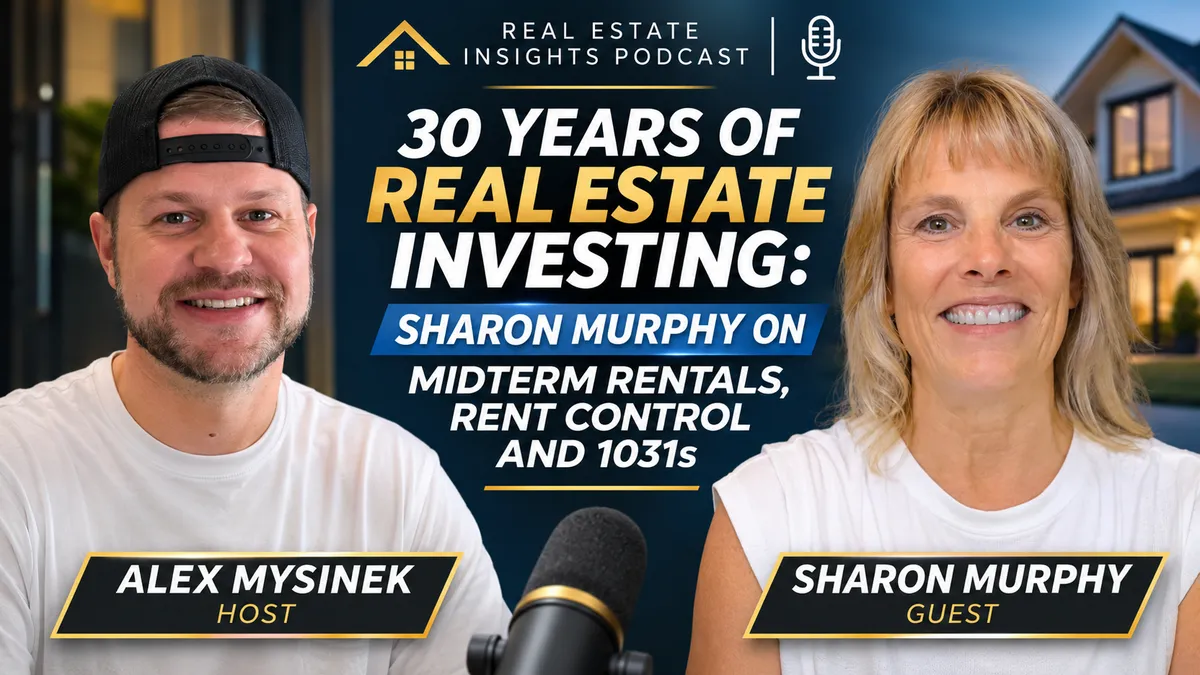
Alex Mysinek Talks Rentals, Midterm Investing and 1031 Exchanges With Epic Realty’s Sharon Murphy
Thirty Years of Investing Meets Targeted Geographic Farming
Alex Mysinek welcomed Sharon Murphy of Epic Realty to the podcast for a conversation that covered a lot of ground. Sharon has built her real estate business through very targeted geographic farming, has about thirty years of personal experience investing in real estate, and has more recently expanded from traditional long term rentals into furnished midterm rentals. Her story shows how a single family decision can grow into a lifelong wealth building strategy.
How a Duplex for a Family Member Started It All
Sharon’s investing journey began in 1998, well before she became a realtor. Her husband’s sister needed a place to live, and her husband had always toyed with the idea of buying a duplex. They found one in Maplewood, and his sister moved in. That first property taught Sharon an important lesson: rental real estate often produces little income at the start and works more like a wealth building business than an income business. Because they charged their family member below market rent, they bought a fourplex with better cash flow to offset the negative cash flow. Her husband, Mike Murphy, later earned his real estate license, another family member needed a place, and a third property, another duplex, followed. Sharon joined the business in 2008. She says the portfolio grew naturally rather than from a grand plan.
Know the Local Rules Before You Buy
One of the biggest lessons Sharon shares is that city regulations matter. Maplewood did not have a rental license program until about five years ago, so she never paid a fee or went through an inspection there. When the couple moved some investments into St. Paul, they found a highly regulated environment with detailed inspection requirements. She now makes sure clients go in with eyes wide open about what the city requires.
Rent Control and Resale Value in St. Paul
Sharon explains that St. Paul limits annual rent increases to three percent, which may not keep pace with insurance, property taxes, or a new roof. There are ways to request increases of up to eight percent through the city, and rental demand in St. Paul is strong. Her advice is to raise rent by the maximum allowed every year and never skip one. Skipping increases can hurt resale value, because buyers run the numbers, and low rents can limit the price a property can bring. She admits she was too nice to some great tenants in the past, leaving rents unchanged for five or six years, which you cannot do in a rent controlled setting. Alex adds that the buyers most likely to purchase a duplex that does not cash flow well are owner occupants who want to house hack. Sharon notes that the two St. Paul properties she sold recently were bought by owner occupants, who also sidestepped the certificate of occupancy inspection requirement.
Furnished Midterm Rentals Explained
Sharon describes the main difference of a midterm rental as providing all of the furniture. She keeps utilities in her name, since guests usually stay 30 to 90 days, often on a work assignment. She got into it because she wanted a getaway place for herself, family, and friends without paying for a cabin out of pocket. She bought a duplex in Amery, Wisconsin, steps from lakes and a 14 mile non-motorized trail, with a long term tenant upstairs who keeps the rent low, mows the lawn, and stays quiet. She earns her income from the downstairs unit, visiting between stays to clean, paint, repair, and wash linens. Her insurance premium stayed the same as before because the upstairs tenants are long term.
Pricing for Midterm Tenants and Why Furnished Finder Works
Sharon uses Furnished Finder, which costs about two hundred dollars a year. Because she already had many years of long term rental experience, she did not need its support services. She finds it less hands-on than Airbnb, which demands strong turnover crews, extra lodging taxes, and high platform fees. She says she overimproved the unit after buying it in 2019, since the typical Furnished Finder client is price sensitive and often traveling for work with housing costs elsewhere. She priced her two bedroom, one bath unit at $1,425 a month with all utilities included and has had no trouble keeping it rented. Alex notes that investors near the airport could serve flight crews who need short stays.
Why 1031 Exchanges and Depreciation Matter
When you sell a non-owner occupied investment property, you generally owe capital gains tax on the gain. Depreciation, which Sharon calls a fake expense because no check is written, helps offset rental income each year, but it is recaptured when you sell and adds to the tax bill. A 1031 exchange is a way to defer that tax by moving proceeds into another investment property. Sharon stresses that you must identify a qualified intermediary before the sale, because the intermediary holds the proceeds in trust. She also says her understanding is that heirs may receive a stepped up basis, which can erase deferred tax, though she is not a tax professional and encourages investors to consult one.
Build a Team Early and Use Good Resources
Both Sharon and Alex emphasize the value of a referral network. A first-time investor benefits from working with a realtor who knows investing, a lender, a CPA, and an intermediary who communicate early. Sharon suggests the Minnesota Attorney General’s office as a starting point, which offers a plain language booklet on landlord and tenant laws of about thirty pages. She also gives her investor clients lifetime advice, with her phone always on for questions.
How Geographic Farming Builds a Business
Sharon credits her husband Mike as the engine behind their farming strategy. They live in Eagan, and local depth gives them an edge at listing appointments and open houses, where boots on the ground matter. For about twenty five years they have used oversized open house signs, with a goal of around eleven signs in their farm area every weekend during the busy spring and summer months. Mike has also hand delivered materials, sent postcards, advertised on grocery carts at the local Cub, and coached youth sports, building relationships while having fun.
What a Realtor Wants From a Lender
When asked what matters most in a lending partner, Sharon says availability. She tries to stay in her lane with buyers, so she values a lender who can answer questions on a Sunday afternoon, especially on FHA loans or when she is unsure how much a buyer is putting down. Alex agrees that credit unions have good loan officers and competitive rates, but weekend availability can make a big difference.
Connect With Sharon Murphy
Sharon’s favorite Eagan restaurant is Andiamo, a neighborhood Italian spot. To talk about buying, selling, investment properties, or 1031 exchanges, you can reach her at 651-399-7124 or at [email protected].
Alex Mysinek helps Minnesota buyers and investors with mortgage financing and is always available to talk through your options. Reach out to Alex to start planning your next purchase.
Sources
MNAttorneyGeneral.gov
IRS.gov
StPaul.gov
FurnishedFinder.com
Realtor.com

Mortgage Calculator
See your total mortgage payments using the tool below.
| Year | Interest | Principal | Balance |
|---|

Social Media Links
YouTube
